In recent years, electric bikes or e-bikes have soared in popularity, becoming a favored mode of transportation for many individuals. Whether it’s their versatility, added speed, or the environmentally-friendly impact, these bikes are revolutionizing people’s travel. However, with this increased usage, new questions emerge, especially from parents: Can you put a child’s seat on an electric bike?
The answer isn’t as straightforward as one might expect. Numerous factors come into play when considering the addition of a child seat to an electric bike, from the bike’s design and weight limit to the type of child seat and its proper installation.
This comprehensive guide delves into these aspects, providing you with the necessary insights and tips to safely enjoy e-bike rides with your child. We will explore the structure of e-bikes, different types of child seats, key factors to consider when installing a seat, safety precautions, and much more. So, buckle up as we embark on this informative journey, answering the question, “Can you put a child seat on an electric bike?”
In recent years, e-bikes have experienced an unprecedented surge in popularity. They provide a unique blend of convenience, physical activity,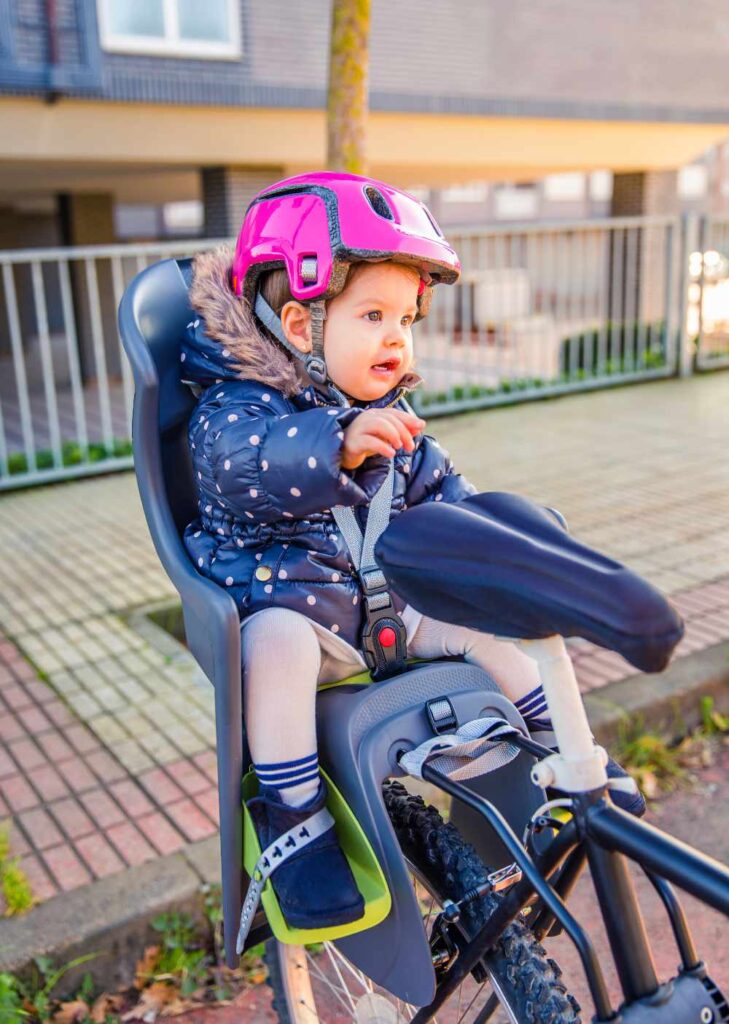 and environmental friendliness that appeals to a wide range of users. E-bikes bridge the gap between traditional bicycles and motorized vehicles, offering the best of both worlds – the ability to pedal for exercise and the option to switch to an electric motor when in need of a boost or rest.
In cities worldwide, e-bikes are being adopted as a practical alternative for commuting, reducing traffic congestion and carbon emissions. Meanwhile, outdoor enthusiasts appreciate the ability of e-bikes to cover greater distances and tackle more challenging terrains, expanding their adventure horizons.
Moreover, the global pandemic has further accelerated the e-bike trend, with more people exploring socially-distanced outdoor activities and looking for alternatives to public transport.
With this growing use of e-bikes, they are increasingly becoming part of family life. As a result, the need to accommodate child seats on e-bikes is gaining prominence, raising questions about compatibility, safety, and best practices.
Electric bikes have several fundamental components that differentiate them from their traditional counterparts. These include the motor, battery, controller, and, in some cases, a display unit. The design and placement of these elements play a vital role in maintaining the bike’s stability and handling, particularly when additional weight such as a child seat is introduced.
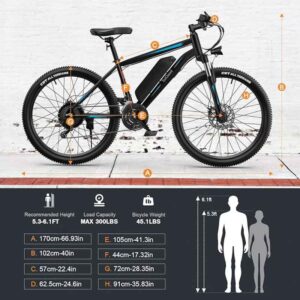 An e-bike’s motor is typically located either in the hub of one of the wheels (front or back) or in the middle of the bike, near the pedals (a mid-drive motor). The positioning of the motor affects the bike’s weight distribution and thus, its balance. Mid-drive motors are generally preferred for better balance and control as they place the weight at the center of the bike.
The battery, which can be pretty heavy, is usually positioned on the down tube (the tube that runs from the handlebars to the pedals) or on the rear rack of the bike. Again, the position of the battery significantly affects the bike’s balance.
The controller, usually a small unit, is often attached to the handlebars, allowing easy access to the bike’s electric assist levels. Some e-bikes also include a display unit on the handlebars that shows information like speed, battery level, and distance traveled.
Given the increased weight and altered weight distribution of an e-bike compared to a traditional bike, it’s designed to ensure stability. The frames of e-bikes are typically built sturdier and have a lower center of gravity to offset the additional weight of the motor and battery. This design provides a stable base that can handle extra weight, such as a child seat.
Speed and Braking
E-bikes typically have a higher average speed than regular bikes, especially when the pedal assist is in use. This speed can be a concern when riding with a child. You’ll need to maintain a safe speed and ensure your brakes are in top condition to stop the bike quickly and safely when needed.
Weight Limits
Every bike, whether it’s an e-bike or a regular bike, has a maximum weight limit that should never be exceeded. This limit includes the weight of the rider, any cargo, and accessories like a child seat. Exceeding this limit can cause damage to the bike and potentially lead to accidents. When you add a child seat, make sure to account for the weight of the seat itself, the child, and any other items you may be carrying.
Proper Installation
It’s crucial to ensure that the child seat is installed correctly on the e-bike. An improperly fitted seat not only poses a risk of accidents but could also affect the balance of the bike. It’s recommended to have the seat installed by a professional or follow the manufacturer’s instructions carefully if you’re doing it yourself.
Stability and Balance
As mentioned earlier, the design of e-bikes caters to the additional weight of the motor and battery, providing good stability. However, adding a child seat—especially a rear-mounted one—can change the bike’s center of gravity, making it harder to mount and dismount or to keep the bike upright when stopped.
In all cases, it’s crucial to remember that safety should always be the top priority. While an e-bike can accommodate a child seat, it’s essential to consider the factors mentioned above and take the necessary precautions to ensure a safe ride.
Rear-Mounted Seat
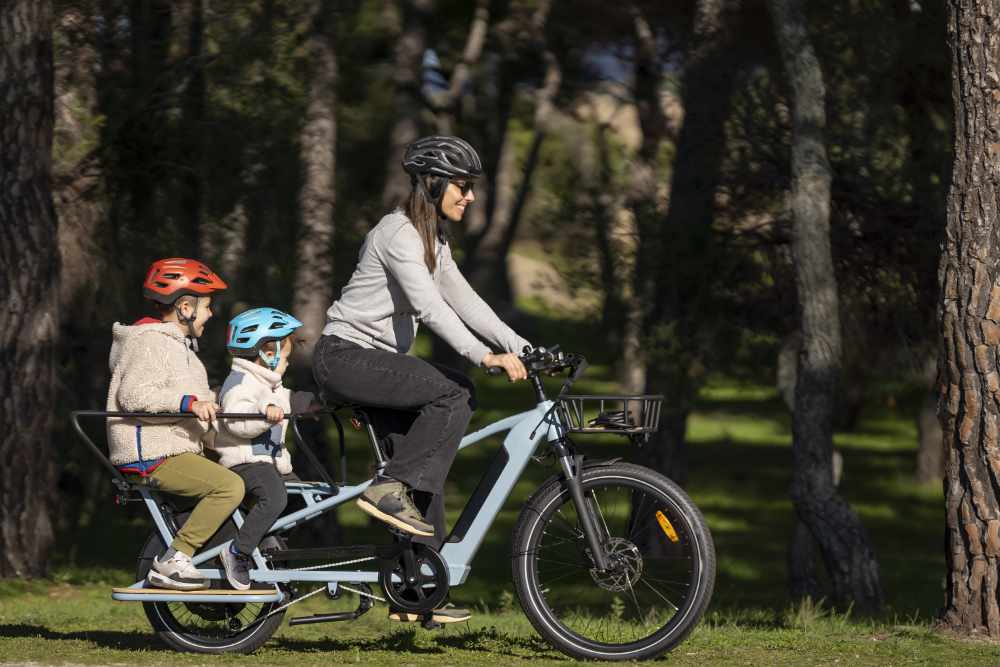
The rear child seat is among the most common type of child bike seats. They are attached behind the saddle and can often accommodate larger children up to around six years old. These seats generally have high backs for head support, a safety harness, and footrests.
The advantage of rear-mounted seats is their capacity to carry larger children comfortably. However, they can affect the bike’s balance due to the high center of gravity, especially when riding without a child. You also need to ensure your e-bike has enough space over the rear wheel to accommodate the rear bike seat.
Front-Mounted Seat
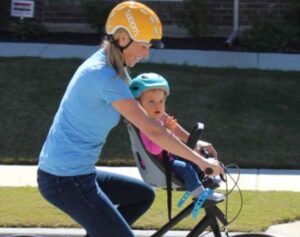
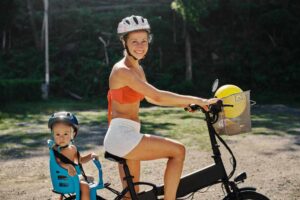
Front-mounted seats are attached to the front of the bike, usually on the top tube or on the handlebars. They are designed for younger children, typically up to about three years old.
The main advantage of these seats is the ease of interaction with the child during the ride. You can keep an eye on your little ones at all times and talk to them easily. They also give children a good view of their surroundings. However, they can affect bike control and steering, particularly if the child moves around a lot.
Mid-Mounted Seat
Mid-mounted seats, also known as “mid-tail” seats, are a relatively newer type of child bike seat. They are placed over the bike’s top tube, in between the rider’s seat and the handlebars. They’re designed to keep the child closer to the rider without affecting the bike’s center of gravity as much.
Mid-mounted seats can offer a better balance than the other two types, and they’re also great for interaction with the child. However, they can be a bit more challenging to mount and dismount due to their positioning.
Each type of seat comes with its own pros and cons, and the best choice will depend on your child’s age and size, your e-bike’s design, and your personal comfort and preferences.
Mounting a child seat on an e-bike involves more than just finding the right seat type. Here are a few essential factors you must take into account:
Choosing the Right Spot for Installation
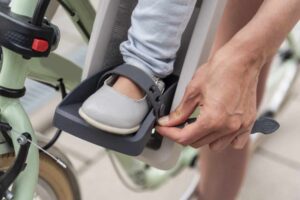
Before you begin the installation, determine where the child seat will fit best on your e-bike. The seat can be mounted in the front, rear, or middle of your bike, depending on the type of seat you’ve chosen and the design of your bike.
Front-mounted seats are usually attached to the handlebars or the frame at the front of the bike, allowing your child to have a clear view. Rear-mounted seats are attached to the bike’s rear rack or seat post, and mid-mounted seats are typically affixed to the frame in the rider’s cockpit area.
Ensuring Secure Attachment
After installation, it’s crucial to confirm the seat is securely attached to the bike. Shake the seat gently to check for any movement. It should remain firmly in place. Check for any loose parts or screws and tighten them as necessary.
Additionally, ensure that the seat doesn’t interfere with any of your bike’s operations. Check your brake cables, gear shifters, and pedals to ensure they are still fully operational and accessible.
Safety should never be compromised when it comes to your child. If the seat seems loose or unstable, it’s better to seek assistance from a professional before using the e-bike with your child onboard.
Adapting to Changes in Balance and Control
Attaching a child seat to your e-bike, especially with a child in it, will change the bike’s balance and handling. Here’s how you can adapt: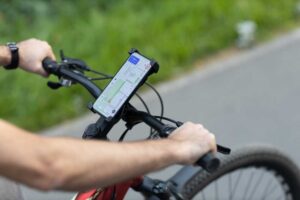
-
Practice First: Before hitting the road, take some time to practice riding with the child seat installed (you can even use a weight similar to your child’s). This will help you understand how the bike handles differently.
-
Be Mindful of Speed: The added weight might make your e-bike faster downhill. Use your brakes more than you typically would to maintain control.
-
Wide Turns: Turning might require more effort and a wider radius. Avoid sharp turns.
Planning Your Route
To ensure the safest ride for you and your child, planning your route carefully is essential. Here are some considerations:
-
Choose Calm Routes: If possible, choose quiet streets or dedicated bike paths, away from heavy traffic.
-
Consider the Terrain: Smooth, flat terrains are preferable, as bumpy surfaces might be uncomfortable for your child and more challenging to navigate.
-
Avoid Steep Hills: If you can, avoid steep hills. Climbing uphill can be more difficult with the extra weight, and descending can be faster than usual.
- Shorter Distances: Be mindful of the extra weight when riding with a child this will impact the battery charge and distance you can travel.
By considering these factors and being aware of how a child seat changes your e-bike’s dynamics, you can ensure a safe and enjoyable ride for both you and your little one.
Shared Adventures
Taking your child along on your e-bike rides can be an opportunity to share your love for cycling and the outdoors with them. It’s a chance to make them see the world from a new perspective, smell the fresh air, feel the wind in their hair, and instill in them a sense of adventure and respect for nature.
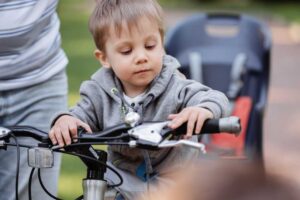
Teachable Moments
E-bike rides can be full of teachable moments. Whether it’s explaining the basics of road safety or imparting knowledge about the sights you pass, these rides can be both fun and educational.
A Bonding Experience
Cycling together is a bonding experience like no other. It’s an activity where you’re both in it together, feeling the same thrills and excitement. It provides an opportunity for quality time, away from the distractions of everyday life.
Remember to bring along a camera or use your phone to capture these precious moments of exploration and discovery.
In the quest of exploring whether you can put a child seat on an e-bike, we’ve traversed a variety of topics. We’ve understood the structure and stability of e-bikes, examined the safety concerns, and surveyed the different types of child seats available. We’ve also delved into the factors that need to be considered when installing a child seat on your e-bike and offered tips for ensuring a safe and enjoyable ride.
The consensus is clear: it’s not only possible to attach a child seat to an e-bike, but it also opens up a world of shared adventures and bonding experiences. With the proper precautions and preparations, you can confidently navigate this journey.
Remember, the joy of e-biking can be multiplied when it’s shared, especially with the little ones. Here’s to many safe and exciting e-bike rides with your child!